
Industrial Conversion and the Australian War Economy
Learning from World War II for a More Dangerous World

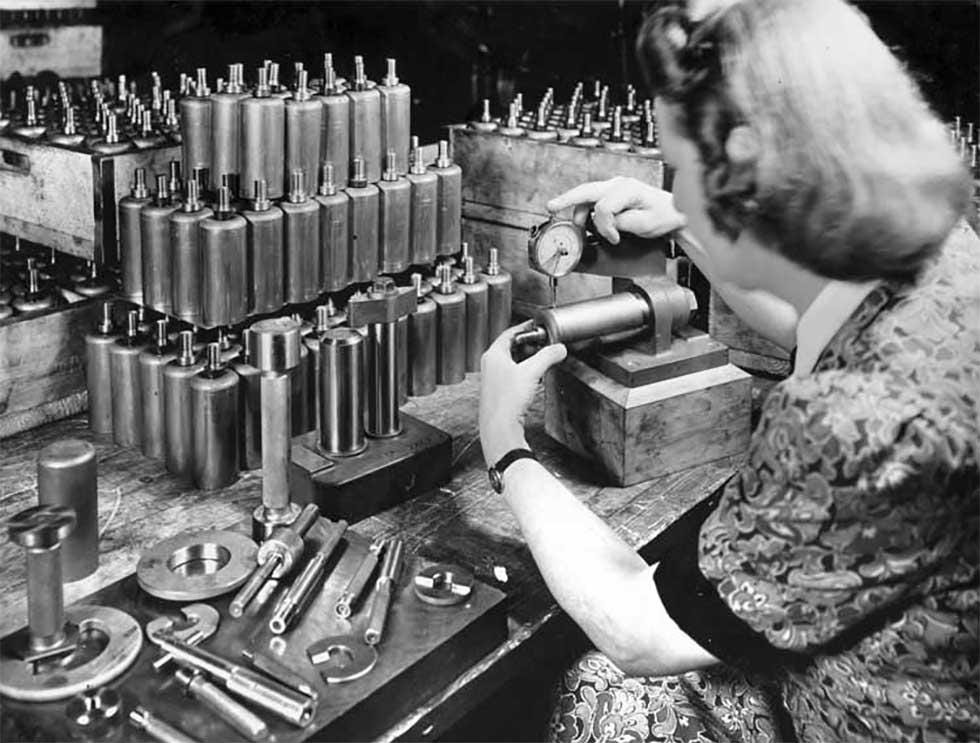
My friends at the Center for Strategic & Budgetary Assessments have recently released a fascinating and highly useful new publication Arsenal in Transition: Lessons from World War II Industrial Conversion. The author, Captain Chad P. Wanek analyses the American automotive industry’s conversion to wartime production to highlight how the US managed the demand to surge industrial capacity to wartime demands. He concludes, among other things, that meeting future wartime demands requires the US to build production capacity during peacetime, noting the importance of balancing exquisite capabilities with the need for scalable mass production.
Reading this new publication got me thinking about Australia’s WWII industrial mobilisation, and having just read Peter Layton’s excellent paper Jump-Starting a Wartime National Industrial Mobilisation, I thought I would put down my own thoughts on learning the lessons from Australia’s WWII experience. The post looks to consider how Australia’s experience of war economy and industrial mobilisation can inform contemporary thinking about defence industrial preparedness, drawing primarily on the Australian official histories of war economy, government and people, and science and industry.
I have often found it remarkable that a small, trade‑exposed economy with limited mass‑production experience sought to create, direct and then unwind a war‑fighting industrial base. The Australian war economy of the Second World War, as reconstructed by S. J. Butlin, C. B. Schedvin and D. P. Mellor, highlights distinctively Australian features of mobilisation (as opposed to the US experience discussed by Wanek): earlier and more pervasive economic controls, a tighter intertwining of public and private leadership, and a conscious attempt to link wartime industrial programmes to post‑war nation‑building.
For the contemporary Australian strategic environment, in which policymakers are once again concerned with great‑power competition, the prospect of high‑intensity conflict, and the adequacy of a relatively narrow domestic defence industrial base. In doing so, I would argue that Australia needs a more deliberate, institutionalised approach to industrial mobilisation, one that goes beyond rhetoric and episodic initiatives to address questions of authority, workforce, design, logistics and industrial geography in a systematic way.
This contemporary relevance is not abstract. Recent Australian commentary, whether framed in terms of preparing the defence industrial base for major conflict, jump‑starting a wartime national industrial mobilisation, or diagnosing long‑standing failures in strategic logistics, has implicitly revisited many of the dilemmas faced in the 1940s, from how to organise the economy under stress to how far the state should go in directing private capital and labour into priority sectors. Peter Layton’s work, both in his paper National Mobilisation During War: Past Insights, Future Possibilities and in his article for The Forge, underlines that effective mobilisation demands prior institutional design, clear allocation of responsibilities and a realistic appreciation of time constants in industrial systems. In parallel, David Beaumont’s The Paper War: Logistics… and everything but the fighting. project and his doctoral work on logistics, national support and the failure to prepare highlight the extent to which Australia’s operational performance has been constrained by structural weaknesses in logistics and national support arrangements that mobilisation policy must explicitly confront. The Australian WWII war economy provides a rich empirical record against which to test these contemporary analyses, and this post seeks to bring that record into dialogue with both Wanek’s American case study and the Layton–Beaumont mobilisation and logistics literature in order to inform present policy debates.
The official histories of Australia’s WWII war economy paint a narrative of a smaller but more tightly integrated mobilisation effort, one in which the state moved earlier and more intrusively, and where the boundary between civilian industry and defence production was deliberately blurred well before the Pacific crisis of 1942 forced full mobilisation. That experience, and the choices it embodied, speak directly to contemporary Australian debates about industrial preparedness, supply chain resilience and the kinds of institutional arrangements implied by concepts such as Wanek’s recommendation for a Civil Reserve Manufacturing Network or an Australian mobilisation authority of the sort Layton envisages, and I have flagged in previous posts on mobilisation.
Wanek’s case study rests on three claims. He argues that pre‑war American mobilisation planning over‑estimated the ease of converting civilian capacity, that the federal government ultimately had to centralise authority and underwrite risk through organisations like the War Production Board and the Defense Plant Corporation, and that managing complexity and design churn in emerging capabilities such as tanks required new approaches to contracting and standardisation. His analysis of the automotive industry’s trajectory, from initial reluctance to curtail profitable civilian production, through partial curtailment and priority systems, to a near‑total shift to defence work by mid‑1942, highlights the limits of voluntarism and the centrality of state‑directed priority allocation when war production competes with mass consumer markets. He concludes by advocating a structured, pre‑planned conversion mechanism in peacetime, a “manufacturing reserve” that can bridge the gap between a relatively narrow defence industrial base and the broader productive capacity of the national economy when conflict demands rapid expansion.
In the Australian case, the scale and structure of the WWII war economy were different, but the underlying problem was recognisably similar: how to turn a modest, largely import‑dependent industrial base into a war‑fighting and war‑sustaining machine under conditions of strategic shock and severe constraint. The official histories frame this story in two phases: the early war years, when the Menzies and then Fadden governments moved gradually from rearmament to war economy; and the Pacific war period from late 1941, when the Curtin government, facing the collapse of the European shield and the Japanese advance, pressed for much deeper mobilisation of labour, industry and science. Where Wanek emphasises the political and institutional struggle in Washington to build authoritative machinery like the War Production Board, the Australian record reveals a more centralised approach from the outset, with economic controls, manpower direction and price regulation introduced earlier and applied more uniformly across a smaller economy.
Butlin’s first war economy volume, covering the period from 1939-1942, traces the progressive tightening of economic organisation between 1939 and late 1941, as Canberra moved from modest defence expansion to more intrusive measures designed explicitly to shape the structure of the economy. Price control, shipping allocation, primary production, secondary industry and manpower were treated not as separate streams but as strands that had to be “woven into a pattern” as the war continued and the pressures of total war mounted. With a far smaller industrial base than the United States, Australia could not rely on an enormous pre‑existing consumer sector waiting to be redirected; instead, it used regulatory instruments, investment decisions and manpower direction to pull resources toward munitions, aircraft, shipbuilding and food production in anticipation of future requirements. In that sense, the Australian state moved more quickly than its American counterpart to treat war production as a national systems problem, although Butlin and Schedvin, in the second volume covering the period from 1942-1945, emphasise repeatedly that policy was often improvised and that coordination among agencies was uneven.
The scale of this mobilisation is evident in the macroeconomic data. In the 1940-41 financial year, Australian war spending totalled about 170 million pounds, roughly the equivalent of 18 billion dollars in today’s money, and by the end of 1943 it had risen to 537 million pounds, or around 58 billion dollars in contemporary terms. By 1942-43 defence expenditure accounted for nearly 34-35 per cent of Australia’s gross domestic product, compared with defence spending today of around 1.9-2.0 per cent of GDP; at peak, defence outlays reached close to 38-39 per cent of GDP. In the same period, private consumption, which had averaged about 75 per cent of GDP before the war, fell to around 50 per cent as public final consumption, dominated by defence, rose above half of GDP. These figures underscore how deeply a small economy had to mobilise: by mid‑war roughly two‑thirds of total public spending was devoted to defence, a scale of effort far beyond current settings.
The labour market was transformed just as dramatically. At the outbreak of war unemployment stood near 9 per cent; by 1943 it had fallen below 1 per cent, with official estimates putting the rate around 0.95-1.1 per cent, effectively full employment. The number of Australians in war work doubled between late 1941 and March 1943 as older men returned to industry, women entered the labour force in large numbers and workers were directed into essential sectors including munitions, aircraft, shipbuilding, engineering, textiles and food production. Overall, around one million Australians served in the armed forces out of a population of seven million, with the strength of the Services peaking at some 700,000 men and 40,000 women in June 1943. Between 1939 and 1944, employment in manufacturing rose by about 25 per cent, while female labour force participation increased by more than 30 per cent over the course of the war, offering both new industrial capacity and new social tensions for policymakers to manage.
Within this macro picture, the growth of war industries was striking. Government spending on defence and the war effort rose rapidly between 1940 and 1943, and much of this went to wages and investment in war‑related industries such as munitions, motor vehicles, steel, chemicals, shipbuilding and aircraft production. By mid‑war Australian factories had the capacity to produce annually hundreds of heavy anti‑aircraft guns, around 800 field guns, nearly 2,000 anti‑tank guns, thousands of mortars and machine‑guns, hundreds of thousands of rifles and pistols, and hundreds of millions of rounds of small‑arms ammunition, alongside a substantial output of shells and bombs. While not all of this capacity was fully utilised, in part because Services were slow to place orders and Treasury wary of over‑commitment, the capacity itself was a product of an aggressive state‑led industrial programme that reached far beyond pre‑war baselines. The broader lesson, consistent with Wanek’s analysis, is that industrial mobilisation is lumpy and path‑dependent: once built, capacity could not be easily re‑purposed without careful planning, and its existence shaped both wartime strategy and post‑war industrial policy.
The Pacific crisis after December 1941 brought Australia much closer to the position Wanek describes for the United States after Pearl Harbor, with the difference that Australia had already committed a relatively high proportion of its national income and labour force to war before Japan entered the conflict. Volume IV of the war economy series shows how, from early 1942, the Curtin government sought to “mobilise the economy fully” by diverting labour into the Services and munitions, reorganising internal and external transport, prioritising food production and introducing a National Economic Plan to integrate disparate control measures. What had been sectoral interventions became, in Butlin and Schedvin’s account, an attempt at an integrated war economy, in which the state accepted responsibility for matching total economic effort to military strategy rather than simply feeding demand into existing market structures. The result was a level of economic and manpower mobilisation that, by 1943, officials judged to be “out of proportion” to the diminished Japanese threat, prompting a difficult and politically fraught rebalancing effort.
Where Wanek’s narrative turns on the conversion of a powerful private automotive sector, Australia’s industrial mobilisation experience is anchored in a more hybrid model in which private leadership and state authority were intertwined from the beginning. Essington Lewis, managing director of BHP, exemplifies this pattern: he became Director‑General of the Department of Munitions and later of Aircraft Production, attempting to mobilise a thin and geographically dispersed industrial base against bureaucratic and political hesitation in the late 1930s. Lewis’s frustration with governmental inaction, and his use of personal authority and industrial networks to get plant built and production lines stood up, parallels Willliam Knudsen’s role in the United States, but in a context where Australian industry lacked the mass‑production experience and capital stock of Detroit. By the early 1940s, however, the Department of Munitions and associated agencies were directly building and operating plants, sponsoring tooling and investing in research laboratories, in ways that resemble the Defense Plant Corporation model Wanek describes, albeit on a smaller scale and with less reliance on massive conversion of consumer factories.
The official histories also emphasise the role of science and technological adaptation in Australia’s mobilisation, themes that mirror Wanek’s discussion of tank production, design churn and the need for adaptable contracting and modularity. Mellor’s volume on science and industry underscores how wartime research organisations, universities and industrial laboratories were brought into a coordinated programme for weapons development, radar, explosives, and later post‑war industrial projects, including the decision to authorise General Motors-Holden to build an Australian car. That decision, made in the midst of demobilisation planning, was emblematic of a broader policy effort to use wartime industrial capacity and technical expertise as a foundation for post‑war manufacturing, rather than simply allowing a reversion to pre‑war patterns of import dependence. The Australian record reinforces Wanek’s argument that industrial mobilisation and reconversion cannot sensibly be separated; the choices made in building capacity and tooling for war have long‑term consequences for national industrial structure and sovereign capability.
At the same time, Butlin and Schedvin are clear that Australia’s attempt to scale back from peak mobilisation levels after 1943 involved “unrelieved confusion” in some sectors, particularly in reassigning munitions workforces, shifting plant back to civilian production and aligning policy ambitions for post‑war reconstruction with practical capabilities. A central part of that story is the difficulty of matching labour supply, skills and regional industrial capacity to a rapidly changing strategic picture, with the threat declining faster than the institutional machinery of control could adapt. That experience maps neatly onto Wanek’s emphasis on the need for stable but flexible requirements, and on the dangers of assuming that complex industrial systems can be rapidly switched off or on without significant friction and political cost. For Australia, the lesson is that mobilisation and demobilisation are both strategically consequential and must be planned as part of a continuum, not treated as discrete episodes separated by sharp policy changes.
When contemporary Australian policy debates return to questions of mobilisation and the defence industrial base, both the American experience that Wanek synthesises, and Australia’s own wartime record should temper any inclination to see industrial conversion as either an easy fix or a purely technical exercise. Historical analyses of Allied mobilisations highlight that success in the 1940s rested on years of pre‑war planning, early investments in industrial expansion, and the creation of institutions capable of coordinating strategy, production and logistics at national scale. For Australia, recent work, including my own, on preparing the defence industrial base for major conflict has underlined the same basic point: a future high‑intensity conflict in the Indo‑Pacific would demand timely delivery of large quantities of technologically complex materiel from domestic industry, and that in turn requires expansion and mobilisation well before a crisis breaks.
Layton’s analysis of national mobilisation argues explicitly that mobilisation is a political-strategic act that must be framed, resourced and led in advance, and cannot be left to spontaneous emergence once fighting starts. Beaumont’s scholarship adds that without sustained attention to the alignment between national industrial policy, strategic logistics and operational concepts, the ADF risks repeating past patterns in which tactical excellence is undermined by shallow logistic and industrial foundations. The Australian and American histories together suggest that credible preparedness demands institutional arrangements, legal authorities and industrial relationships that can bridge peacetime and wartime without relying on last‑minute improvisation.
Translating these historical insights into contemporary Australian policy could take several forms. First, an Australian analogue to the kind of manufacturing reserve Wanek outlines would need to be tailored to Australia’s industrial geography: smaller absolute scale, high reliance on imported machinery and components, and a heavy concentration of advanced manufacturing in a handful of regions. Rather than assuming a deep pool of mass‑manufacturing firms can be flipped to defence production, Australian policymakers might instead think in terms of networks of specialised manufacturers, including in mining equipment, heavy engineering, automotive components and electronics, that can be pre‑qualified, tooled and exercised to produce specific classes of defence and dual‑use items in crisis. That would require the Commonwealth to invest in shared tooling, test facilities and digital production systems, echoing the way wartime agencies underwrote the capital costs of new plants and equipment when private firms were reluctant to bear the risk alone, and aligning these investments with the strategic logistics priorities that I, David Beaumont and others have identified elsewhere.
Second, Australia’s experience with strict wartime manpower controls and the contemporary reality of a tight labour market suggest that any serious mobilisation concept must treat skills and workforce development as a central planning problem rather than an afterthought. In the 1940s, labour was directed into munitions, aircraft and shipbuilding at the expense of non‑essential industries, but that process was politically contested and administratively difficult, contributing to the confusion that Butlin and Schedvin described. Today, the challenge is less about raw numbers than about the depth of specialist skills in areas like advanced manufacturing, systems integration, software and strategic logistics, where the defence sector already struggles to recruit. An Australian industrial reserve approach would therefore need to embed training pathways, reserve‑style arrangements for key technical and logistics personnel, and mechanisms for rapid reallocation of skilled workers across sectors, all backed by clear legal authority before a crisis hits.
Third, both Wanek’s analysis of tank production and Mellor’s account of wartime science underscore the importance of design for manufacturability, modularity and standardisation if industrial systems are to scale under stress. In the United States, the shift away from rigid competitive bidding and toward negotiated, cost‑plus contracts allowed for standardisation of trucks and the rationalisation of tank designs, even as battlefield experience drove changes in requirements. In Australia, wartime collaboration between scientists, engineers and production managers helped ensure that limited industrial resources were applied to designs that could actually be manufactured and maintained in local conditions. For contemporary Australian capability planning, that suggests a stronger insistence on modular open systems, common components and design choices that privilege scalability, maintainability and logistic supportability over boutique performance, especially in those classes of equipment most likely to be required in bulk in a high‑intensity conflict.
Finally, the institutional question runs through both histories and should be central to any Australian reconsideration of mobilisation arrangements. Wanek shows that the United States only overcame the contradictions of voluntary industrial conversion once it created a genuinely authoritative agency, the War Production Board, with the legal powers, staff and political backing to assert priorities across both military services and private industry. Australia’s wartime machinery, stretching from the War Cabinet through the Department of Munitions and the manifold wartime boards and commissions, never achieved that degree of concentration, but it did move towards a more integrated National Economic Plan that sought to align economic and military priorities. Contemporary proposals to improve Australian mobilisation will need to grapple with the same issue: whether to build a dedicated, standing national mobilisation institution with clear authority across departments and strong integration with logistics and industrial policy, or to rely on looser coordination mechanisms that history and contemporary analysts suggest may prove inadequate under crisis conditions.
If Australia Had to Mobilise Today
Any attempt to transpose the scale and intensity of Australia’s WWII mobilisation onto today’s economy must start from the stark structural differences between then and now. Contemporary Australia is larger, richer and more urbanised, but it is also more services‑dominated, more deeply embedded in global supply chains and more reliant on imported manufactures than its 1940s counterpart. Manufacturing’s share of gross value added has fallen to around 6-7 per cent, while services account for more than 70 per cent of GDP, and the small defence industry that does exist is heavily concentrated in a few sectors and regions. The Australian Bureau of Statistics estimates that in 2023-24 the defence industry contributed $11.9 billion in gross value added, just 0.47 per cent of the economy, and employed about 69,400 people across 5,539 businesses. Defence spending, measured on the conventional basis, has hovered between 1.9 and 2.0 per cent of GDP, equivalent to somewhere in the mid-$50 billion range annually, although broader NATO‑style measures that include pensions and some capital flows push the figure closer to 2.6–2.8 per cent, or around $70-75 billion in 2025-26.
A mobilisation effort commensurate with the Second World War, in proportional terms, would therefore be of an entirely different order from current debates about edging defence spending from 2 to 2.3 or 3 per cent of GDP. If Australia were to devote even half of the wartime peak share of GDP to defence outlays (say 18-20 per cent rather than nearly 40 per cent) that would imply annual defence‑related expenditure of $400-450 billion at today’s GDP, compared with the roughly $55-75 billion now under discussion. The analogue on the labour side would be a sustained redirection of several hundred thousand workers into defence and related industries, including a significant proportion of the existing engineering, ICT, manufacturing and construction workforce, in an economy that already operates with unemployment rates around 4 per cent and acute skills shortages in key trades. In practical terms, such an effort would almost certainly require comprehensive labour market direction, extensive rationing of consumption, capital controls, and a degree of state coordination of investment that is far beyond current institutional and political expectations.
A more plausible but still demanding scenario is the one canvassed by Layton and others: a steady, deliberate expansion of defence‑related activity to something like 3 per cent of GDP in peacetime, combined with pre‑planned arrangements to surge higher in crisis through rapid reallocation of fiscal resources and industrial capacity. Even in this more moderate frame, the numbers are sobering: moving to 3 per cent would add on the order of $25-30 billion per year to current defence outlays, and a further crisis‑driven surge to, say, 5 per cent of GDP would require an additional $40-50 billion annually, along with associated shifts in workforce and industrial priorities. For a defence industry that currently represents less than half a per cent of gross value added, a doubling or tripling of throughput would strain management capacity, supply chains and workforce pipelines unless those were deliberately strengthened well in advance.
What, then, should Australian governments and companies be thinking about and doing now to prevent a future mobilisation effort from overwhelming the country?
First, policymakers need to approach mobilisations as a whole‑of‑nation systems problem, not as an extension of defence budget debates. That requires an explicit national mobilisation framework that links strategic warning indicators, fiscal policy, industrial policy, workforce planning, logistics and regulatory powers into a coherent sequence of actions, rather than treating each as a separate silo. The wartime National Economic Plan sketched by Butlin and Schedvin, together with the more developed institutional arrangements in the United States that Wanek describes, point to the value of a standing mobilisation authority with clear legal powers to coordinate across portfolios, set priorities and manage trade‑offs between defence and civilian needs under stress. Contemporary equivalents would need to be designed with the complexities of a services‑dominated, globally integrated economy in mind, but the basic logic is the same: someone has to own the problem at the national level before a crisis, not during it.
Second, governments and industry should identify, nurture and exercise a network of critical industrial capabilities that can be scaled in crisis, rather than assuming that a generic ‘manufacturing sector’ can be switched on at will. ABS and Defence Industry Account data already show the contours of this network: about 5,500 firms, heavily concentrated in professional, scientific and technical services and manufacturing, with regional clusters in New South Wales, Victoria, South Australia and Western Australia. Building on this base means deliberately deepening capabilities in high‑leverage areas such as precision machining, advanced materials, electronics, guided weapons, fuels and energetics, heavy engineering and specialised logistics services, through long‑term contracts, shared infrastructure and co‑investment under frameworks like Future Made in Australia. It also means accepting, as wartime planners did, that some capacity will be maintained at less than full peacetime commercial efficiency in return for the option value it provides in crisis, a political argument that needs to be made openly rather than smuggled into budgets as a residual.
Third, the workforce challenge must be tackled upfront, with a particular focus on the intersection between defence industry, critical civilian infrastructure and logistics. Contemporary defence and defence‑industry employment, roughly 110,000 in Defence and around 69,000 in the defence industry, represents a small share of Australia’s 14 million‑plus workforce, but those personnel sit in some of the most skill‑intensive and scarce occupations in the economy. As Beaumont’s work emphasises, historic failures in national support have often turned on thin logistics cadres and under‑developed national support concepts, not simply on platform numbers. Developing reserve‑style arrangements for key technical, engineering and logistics personnel, expanding STEM and trade training with mobilisation in mind, and creating clear pathways for movement between civilian industry, Defence and a future mobilisation authority would make it easier to scale activity rapidly without improvising under fire.
Fourth, greater attention should be given to the resilience and controllability of supply chains for critical inputs, from fuels and energetics to specialist components and digital infrastructure. Experience shows that shipping constraints, raw material bottlenecks and transport vulnerabilities could erase months of planning overnight; today’s just‑in‑time, globally stretched supply chains are at least as fragile, particularly in an Indo‑Pacific conflict scenario with contested sea‑lines. Practical measures might include expanded strategic stockpiles of fuels and critical minerals, diversification of import sources where domestic production is unrealistic, and the design of modular systems that can accommodate substitution of components as availability shifts, all integrated into Defence’s and industry’s logistics planning.
Finally, governments and firms need to confront the political economy of mobilisation honestly. The defence share of GDP today is low by historical standards, and serious moves toward 3 per cent and beyond will involve visible trade‑offs with consumption, social spending and other priorities, even if the aggregate economic burden remains manageable. Making those trade‑offs sustainable will require a public narrative that connects mobilisation to national resilience and sovereignty, and institutional arrangements that ensure the burdens and opportunities of mobilisation, including profitable long‑term contracts, regional investment and workforce development, are distributed in ways that are seen as fair. The alternative is a pattern in which governments postpone hard choices until strategic shock forces rushed, improvised and potentially destabilising measures, precisely the pattern that wartime figures like Essington Lewis struggled against, and that contemporary analysts such as Layton and Beaumont warn against repeating.
Taken together, the American and Australian records confirm that industrial mobilisation is a strategic choice, not an automatic by‑product of crisis, and that the conversion of civilian industry to military purposes is as much about institutions, incentives, logistics and political leadership as it is about factory floors. For Australia, learning from both the ‘arsenal in transition’ that Wanek describes and the more modest but instructive wartime war economy analysed by Butlin, Schedvin and Mellor, and reading those histories alongside Layton’s mobilisation work and Beaumont’s logistics research, implies a deliberate peacetime effort to define the role of industry in national defence, invest in capacity that can be credibly scaled, and build the organisational mechanisms that can coordinate that scaling when it matters most. The choice is whether to accept that work as a present‑day national project or to assume, as Essington Lewis found to his cost, that urgent improvisation in the face of danger will somehow deliver the industrial and logistic answers that careful, early preparation could have supplied at far lower risk.